
 By Anne Gilbert
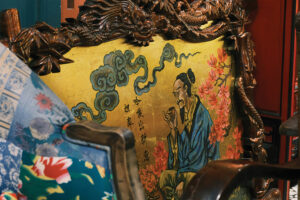
When a piece of hand-painted , 18th and 19th century American furniture hit’s the auction block these days bidding zooms. Good examples can cost thousands.
In late 18th century England, Italy and France, painting and gilding quality furniture and decorative accessories became fashionable. At that time neo-classical furniture styles with flat surfaces offered the perfect medium for painted motifs. Rococo, Venetian and French Provincial painted pieces were top sellers in the early 20th century, especially in America.
Not all of the Venetian pieces were hand painted , but used small, colored engravings, glued on then varnished over.
When it filtered down to America everyday pieces took a different turn with folk art designs known as Pennsylvania Dutch. By 1825 mass-produced pieces , such as Hitchcock chairs and inexpensive, heavy country style pieces, known as “cottage furniture” had painted designs.
Quality wood with fine graining wasn’t painted but covered with a transparent finish. Less expensive woods were often painted to imitate finely grained woods. Tops of chests imitated marble. Subjects often pictured landscapes and flowers as well as historical or neo classical motifs.
Some of the finest painted furniture, known as “fancy furniture” was made in Baltimore.
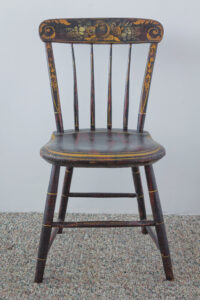 There was nothing amateurish about furniture painting. In fact there were many professional ornamental painters during the 18th century who advertised the type of decorations they specialized in. Only a few are known by name such as John and Hugh Finlay, of Baltimore. Another center for furniture painting was in Albany, New York. Some of the landscapes on the top rails of chairs are similar to the Hudson river paintings done at the time. Painters also worked throughout New England.
Probably the best known producer of “fancy chairs” is Lambert Hitchcock. By 1825 he employed over one hundred women, men and children. Designs could be done more quickly using stenciled ornamentation. The wood used was maple and the style combined Sheraton and French Directoire. Popular designs were fruit and leaf patterns, fountains, drinking birds and horns-of-plenty. Some chairs were painted black to imitate ebony and designs were gilt stencils. Seats were rush, cane and wood. Today an authentic Hitchcock chair could sell for $1,000 or more.
CLUES: Antique painted furniture can still turn up anywhere, especially original painted Hitchcock chairs. However they were reproduced from the 1920s on. During the 1976 Bicentennial it was popular to stencil and paint undecorated antique furniture.






Follow Us